A swimming pool waterfall is more than a decorative addition. It can transform an ordinary pool into an attractive outdoor retreat, create the soothing sound of flowing water, and enhance the overall landscape design. When selecting a waterfall feature, one of the most important decisions is choosing between acrylic and stainless steel pool waterfalls.
Both materials are popular for residential swimming pools, luxury villas, hotels, resorts, and commercial water features. However, they differ in appearance, durability, maintenance requirements, lighting possibilities, and overall design flexibility.
In this guide, we compare acrylic vs stainless steel pool waterfalls, explain their advantages and limitations, and help you choose the best material, size, and design for your swimming pool.
1. What Is a Swimming Pool Waterfall?
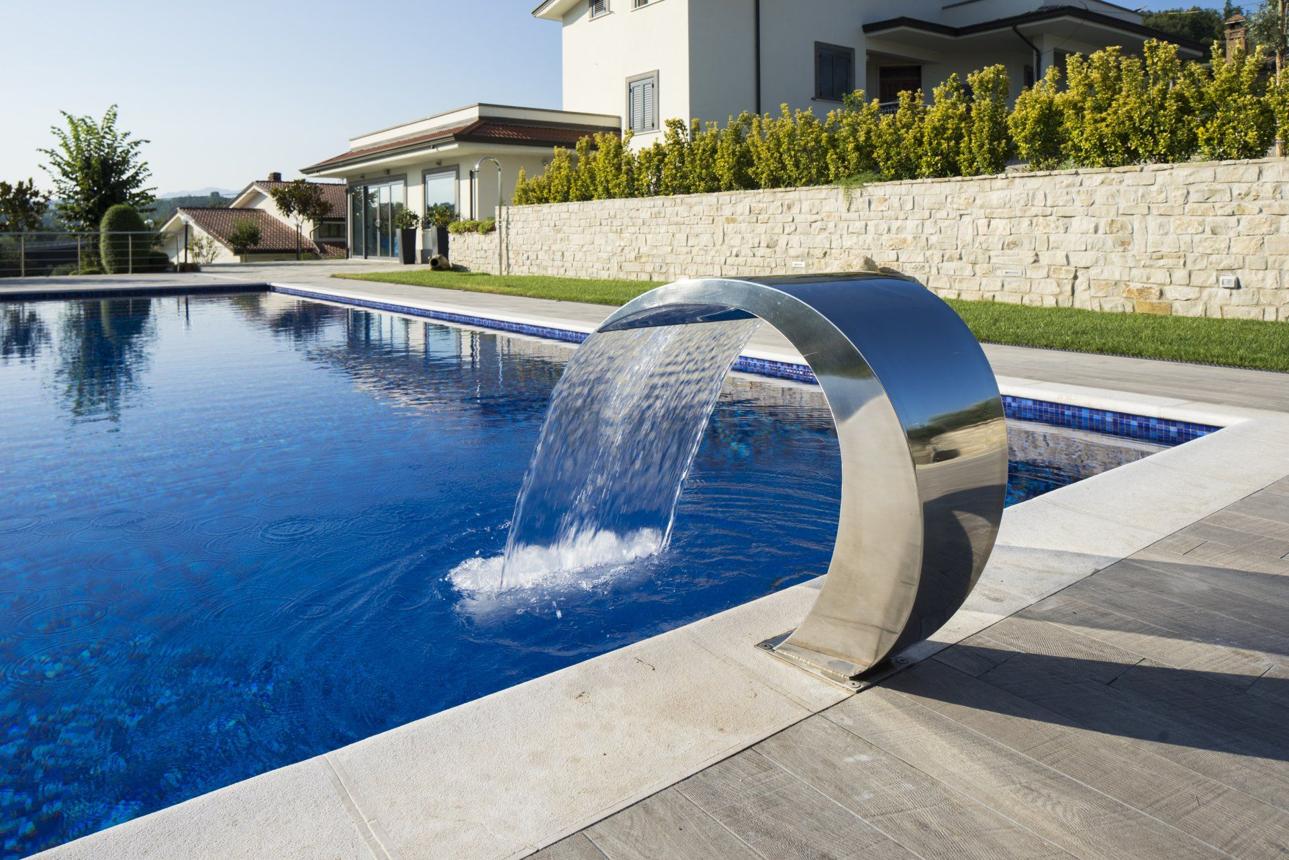
A swimming pool waterfall, also known as a pool water feature, waterfall spillway, or water descent, is a decorative water outlet designed to create a continuous stream or sheet of water flowing into a swimming pool.
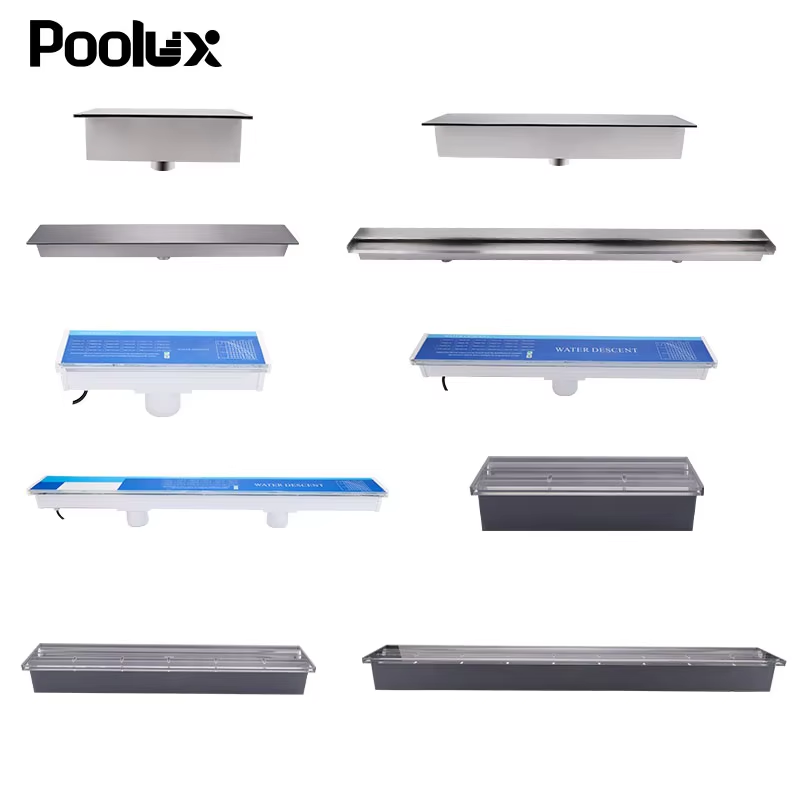
Depending on the design, the waterfall can produce a smooth, transparent curtain of water or a more dynamic cascading effect. Modern pool waterfalls are available in various shapes, materials, and sizes to suit different pool structures and landscape styles.
Two common material options are:
- Acrylic Pool Waterfalls: Water features manufactured with acrylic components, often chosen for modern designs and decorative lighting applications.
- Stainless Steel Pool Waterfalls: Water features manufactured from stainless steel, commonly available in 304 or 316 grades, offering a sleek metallic appearance and a durable structure.
Both types can be used to create attractive water effects, but their performance depends on material quality, product construction, water chemistry, installation conditions, and regular maintenance.
2. Acrylic Pool Waterfalls: Features and Benefits
Acrylic pool waterfalls are an appealing choice for homeowners, swimming pool designers, and contractors looking for a contemporary decorative water feature.
Acrylic is a lightweight, versatile material that can be manufactured into different configurations. Certain acrylic designs also allow light to pass through selected components, making them especially attractive for illuminated water features.
Advantages of Acrylic Pool Waterfalls
Modern Decorative Appearance
Acrylic water features can create a clean, contemporary appearance that complements modern pools, outdoor terraces, and luxury landscapes.
Excellent Lighting Design Potential
Depending on the construction, acrylic components can support decorative illumination and help create colorful visual effects when combined with suitable LED lighting.
Lightweight Material
Acrylic is relatively lightweight, which can make certain product designs easier to handle during transportation and installation.
Flexible Design Options
Acrylic can be used in different waterfall configurations, providing designers with additional possibilities for customized decorative water features.
Potential Limitations
Although acrylic has several advantages, buyers should also consider its limitations. Its surface may be more susceptible to scratching than stainless steel, and unsuitable cleaning chemicals can damage the material. Acrylic can also expand with temperature changes, so appropriate installation allowances are important.
For outdoor applications, selecting an acrylic grade designed for UV exposure is essential. Long-term appearance and durability depend on material formulation, manufacturing quality, and environmental conditions.
3. Stainless Steel Pool Waterfalls: Features and Benefits
Stainless steel pool waterfalls are widely used in residential and commercial swimming pool projects because of their structural strength, refined appearance, and suitability for demanding outdoor environments when the correct material grade is selected.
These waterfalls are commonly manufactured using 304 stainless steel or 316 stainless steel. Both provide an attractive metallic finish, but they offer different levels of corrosion resistance.
Advantages of Stainless Steel Pool Waterfalls
Strong and Durable Construction
Stainless steel provides excellent mechanical strength and rigidity, making it suitable for a wide range of pool waterfall designs.
Elegant Metallic Finish
The smooth stainless steel surface creates a clean, professional appearance that integrates well with modern swimming pools and architectural landscapes.
Multiple Material Grades
Buyers can choose between 304 and 316 stainless steel according to the project’s environmental exposure, water chemistry, and budget.
Wide Range of Sizes and Designs
Stainless steel waterfalls can be produced in compact or extended widths, with different outlet configurations for residential pools, commercial installations, and large decorative water features.
304 vs 316 Stainless Steel
Choosing the correct stainless steel grade is particularly important for swimming pool applications.
- 304 Stainless Steel: Offers good corrosion resistance in many environments and is commonly selected for projects with moderate exposure conditions and controlled budgets.
- 316 Stainless Steel: Contains molybdenum, which improves resistance to certain forms of chloride-related corrosion. It is often preferred for more demanding installations, including coastal environments.
However, neither grade is completely immune to corrosion. Poor water chemistry, salt deposits, inadequate cleaning, and exposure to concentrated pool chemicals can cause staining or surface damage. Even 316 stainless steel requires appropriate maintenance.
4. Acrylic vs Stainless Steel Pool Waterfalls: Key Differences
To understand which option is better for your swimming pool, compare the most important material characteristics below.
| Comparison | Acrylic Waterfall | Stainless Steel Waterfall |
|---|---|---|
| Material | Acrylic | 304 or 316 stainless steel |
| Appearance | Modern, decorative, potentially translucent | Sleek, metallic, architectural |
| Weight | Generally lighter for comparable components | Generally heavier |
| Structural Strength | Depends on thickness and construction | High strength and rigidity |
| Corrosion Resistance | Does not undergo metallic rust corrosion | Grade-dependent; requires maintenance |
| LED Lighting | Suitable for selected illuminated designs | Available on compatible LED models |
| Cleaning | Gentle, acrylic-safe cleaners | Non-abrasive stainless steel care |
| Cost | Varies by construction and lighting | Varies by steel grade, size, and finish |
Neither material is automatically better in every category. The ideal choice depends on the desired appearance, installation environment, product specifications, and expected maintenance requirements.
5. Should You Choose a Pool Waterfall With LED Lighting?
LED pool waterfalls are becoming increasingly popular in modern swimming pool designs because they add visual interest after sunset.
Depending on the product model, both acrylic and stainless steel water features may be available with integrated or compatible LED lighting systems.
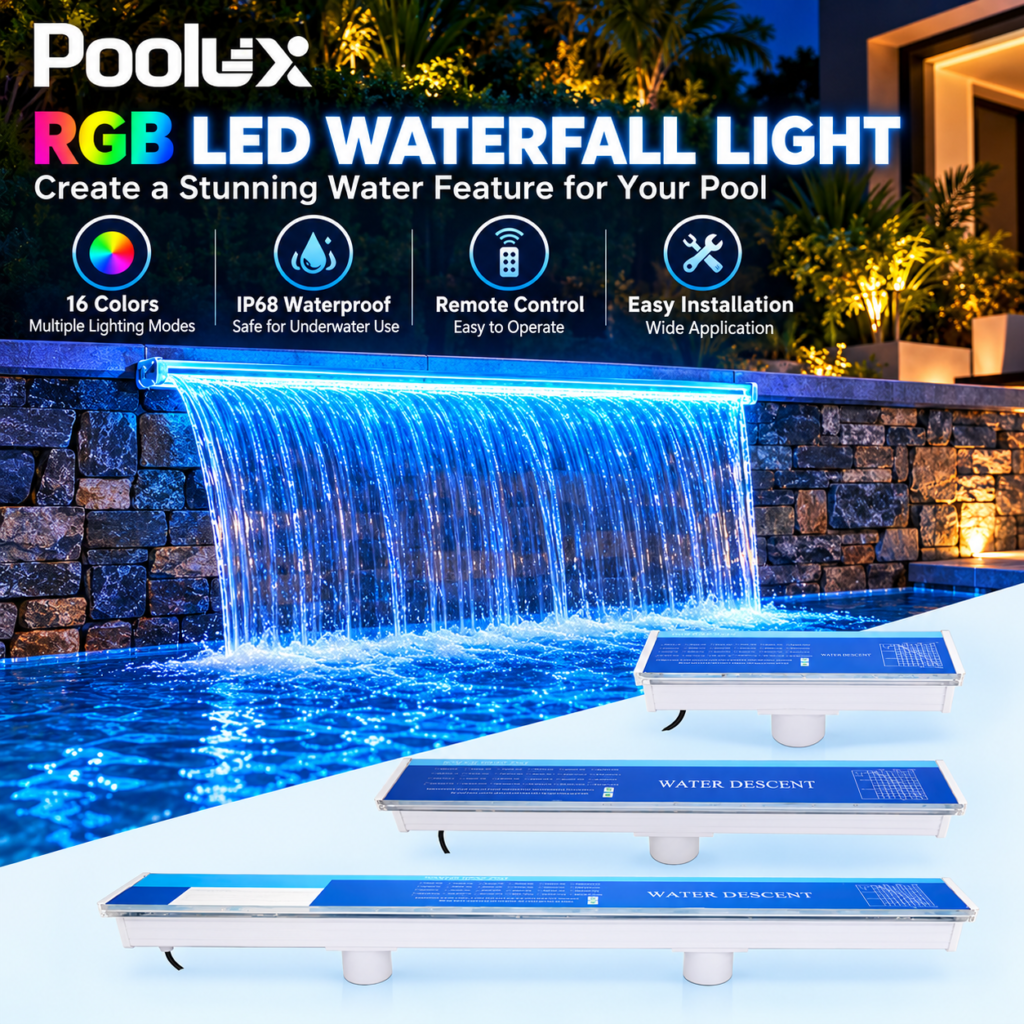
LED options may include single-color or RGB lighting, allowing users to create different nighttime atmospheres.
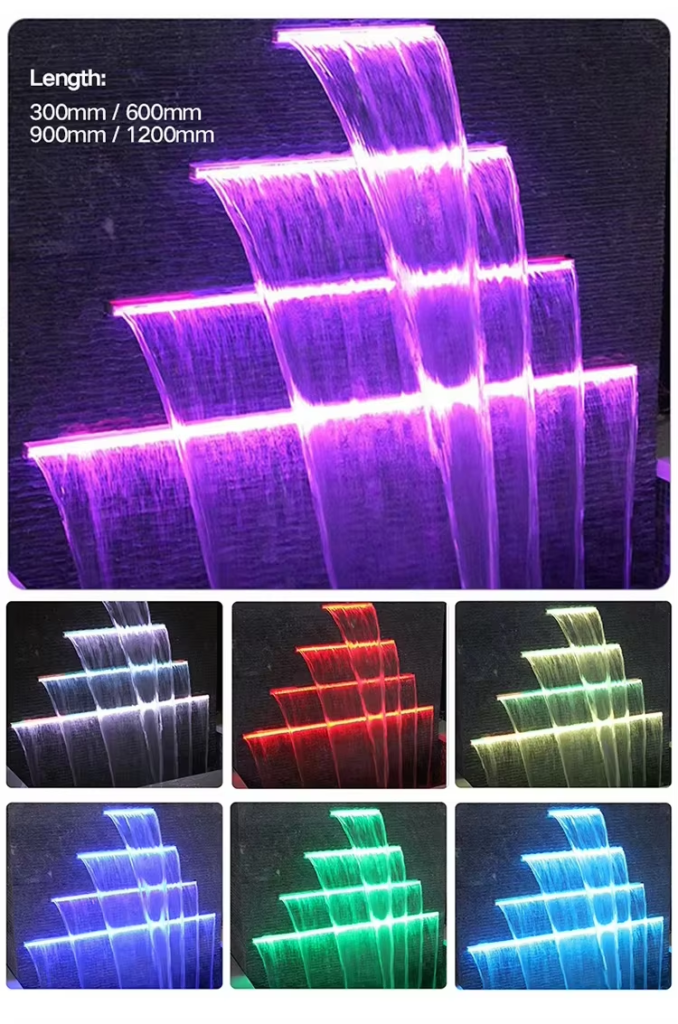
- Without LED: Ideal for minimalist designs where the natural movement and sound of water are the primary focus.
- Single-Color LED: Suitable for creating an elegant, consistent lighting effect around the pool.
- RGB LED: Offers multiple color options for decorative settings, entertainment areas, and hospitality projects.
For projects that prioritize decorative illumination, acrylic-based waterfall designs may offer interesting lighting possibilities. Stainless steel models with optional LED lighting are also attractive choices for customers who prefer a metallic finish.
Before purchasing, confirm the lighting voltage, waterproof protection, power supply, controller compatibility, and whether the lighting components are included in the product package.
6. Important Installation Considerations
Correct installation is essential for both acrylic and stainless steel pool waterfalls. Even a high-quality product may produce an uneven water effect if the plumbing and installation are poorly designed.
Water Flow and Pump Selection
The pump must deliver the appropriate flow rate at the required operating pressure. The necessary performance depends on waterfall width, outlet design, pipe length, fittings, and installation height.
Consult the product manufacturer’s technical specifications before selecting a pump. An independent pump or properly designed water-feature circuit may be necessary for some projects.
Level Installation
The waterfall outlet should be positioned and leveled according to the manufacturer’s installation instructions. Uneven positioning can result in an irregular sheet of water or inconsistent flow across the outlet.
Proper Structural Support
The supporting surface must accommodate the waterfall’s weight, dimensions, pipe connections, and any required movement allowances. This is especially important for longer spillways and acrylic installations subject to thermal expansion.
Electrical Safety
For LED-equipped waterfalls, all electrical components must be installed according to applicable pool electrical safety requirements. Waterproof connections, suitable transformers, grounding or bonding where required, and professional installation are essential.
Always check local regulations and use a qualified swimming pool contractor or electrician where appropriate.
7. Maintenance Tips for Long-Lasting Pool Waterfalls
Regular maintenance helps preserve both the appearance and performance of your swimming pool waterfall.
For Acrylic Pool Waterfalls
- Clean with a soft microfiber cloth and an acrylic-safe cleaning solution.
- Avoid abrasive pads, harsh solvents, and incompatible chemical cleaners.
- Remove mineral deposits carefully using manufacturer-approved methods.
- Inspect seals, joints, and connections periodically.
- Follow the manufacturer’s instructions for protection against prolonged outdoor exposure.
For Stainless Steel Pool Waterfalls
- Rinse exposed surfaces regularly to remove chemical residue and salt deposits.
- Use suitable, non-abrasive stainless steel cleaning products.
- Avoid chloride-based cleaning chemicals and steel wool.
- Maintain proper swimming pool water chemistry.
- Inspect for early signs of staining or corrosion and address them promptly.
For either material, keep the water outlet free of debris and mineral buildup to maintain a smooth and consistent waterfall effect.
Conclusion: Find the Right Waterfall for Your Swimming Pool
When comparing acrylic vs stainless steel pool waterfalls, the most important factors are appearance, material performance, waterfall size, installation requirements, and long-term maintenance.
Acrylic pool waterfalls are attractive options for modern decorative designs and innovative lighting applications. Stainless steel pool waterfalls provide structural strength, an elegant metallic appearance, and a selection of material grades for different applications.
Whether you are designing a backyard swimming pool, upgrading an existing installation, or planning a commercial water feature, choosing the correct material and outlet dimensions will help you achieve a beautiful and reliable waterfall effect.
Explore Acrylic and Stainless Steel Pool Waterfalls
Looking for a reliable swimming pool waterfall manufacturer? POOLUX offers a selection of acrylic and stainless steel pool waterfall products in multiple sizes and configurations for residential and commercial swimming pool projects.
Whether you need a compact water descent, an extended stainless steel spillway, or a decorative waterfall with optional LED lighting, our team can help you explore suitable solutions for your project.
Contact us to learn more about available models, material options, dimensions, and wholesale quotations.